
Tree Removal
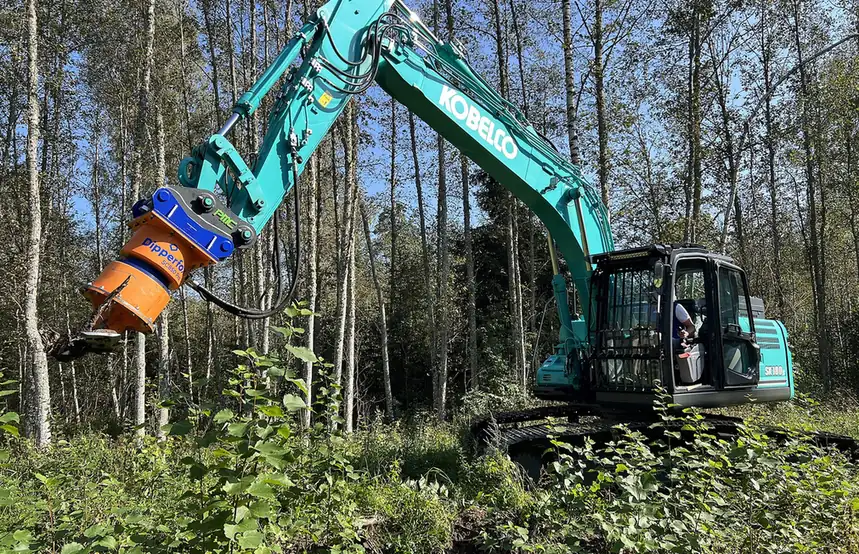
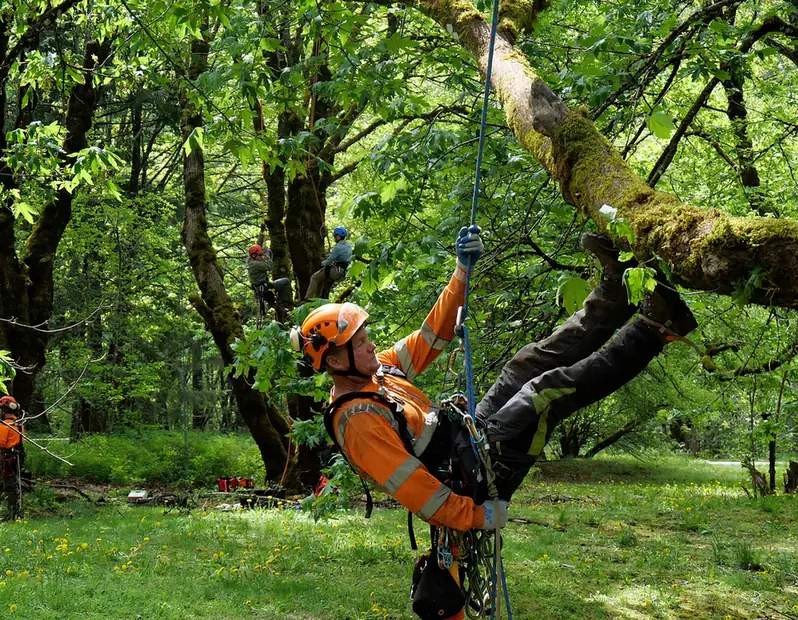
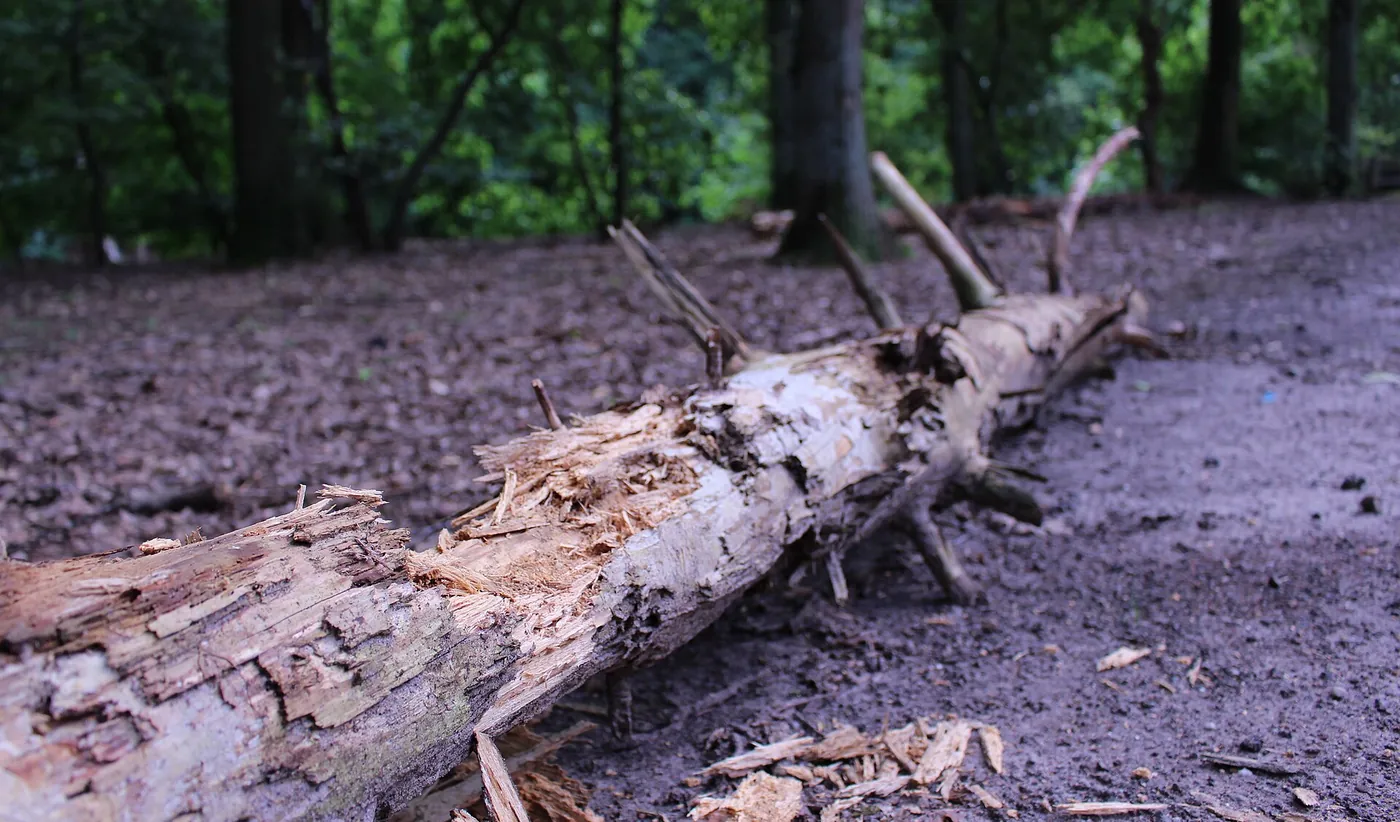
Felled whole where there is room to lay it out, otherwise dismantled from the top on ropes.
Read more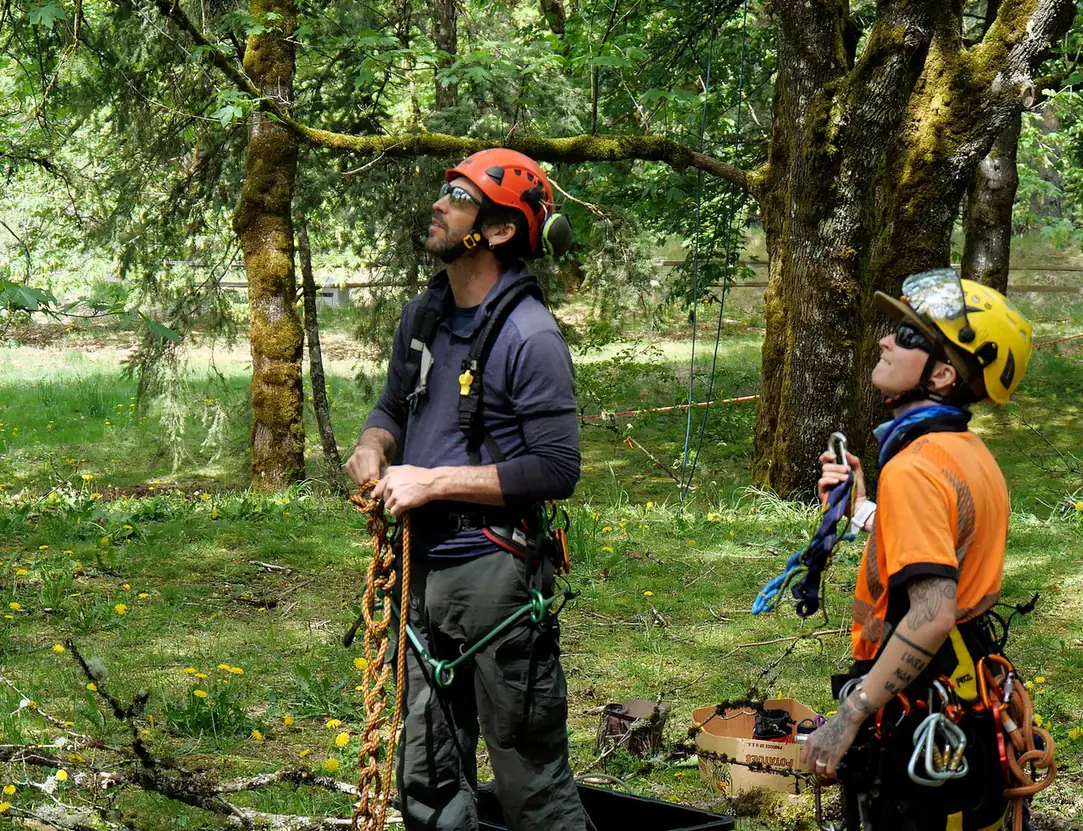
Sixty-year-old oaks, and a county full of dead ash, standing over houses built before anyone planned for either. We take them down, prune what can be kept, and grind what is left. Call and we will come and look at yours.
These are what people ring us about, and every one can be spotted from the ground without a ladder. None of them means a tree is automatically coming down. All of them are worth a look before the next storm rather than after it.
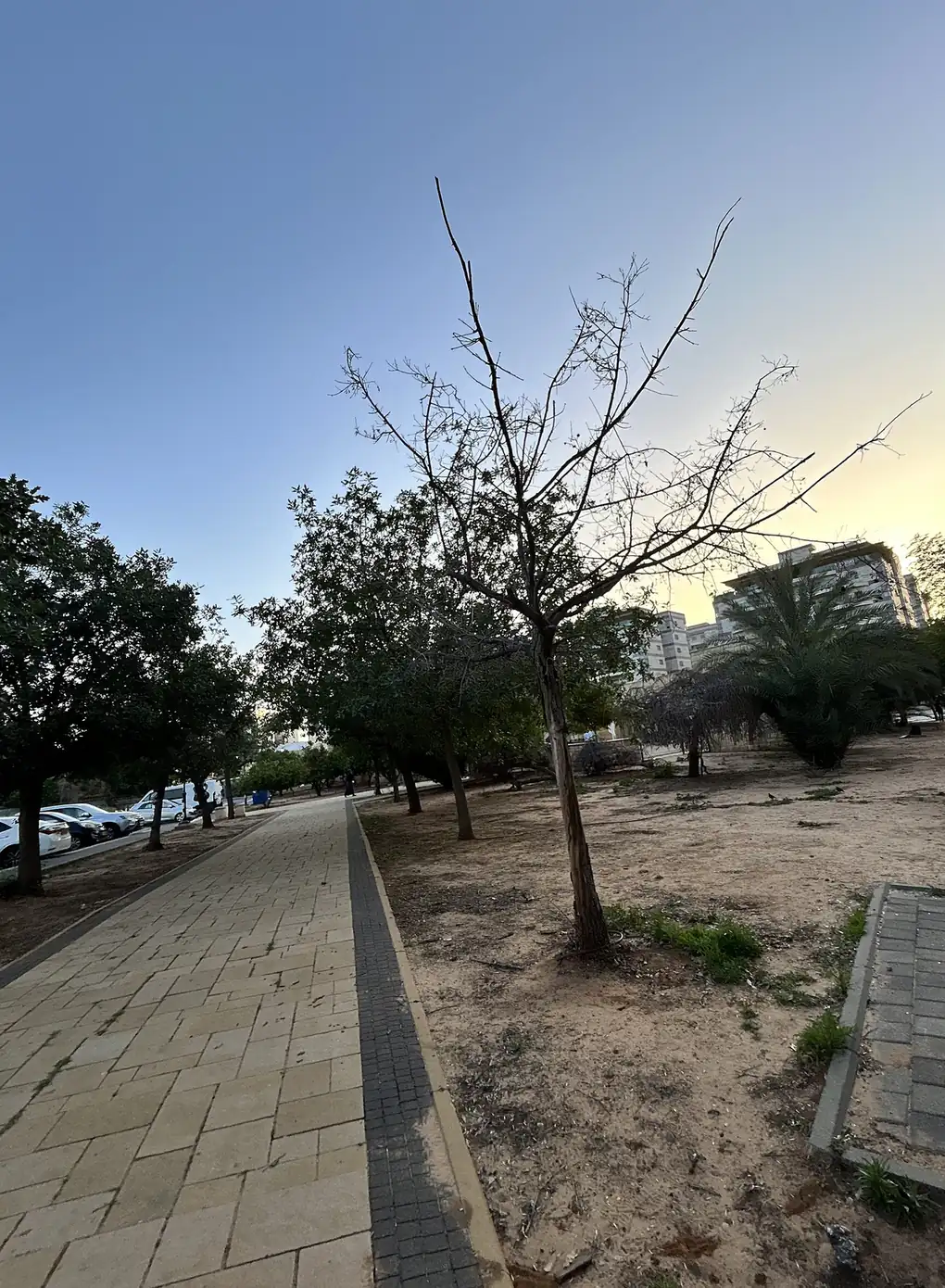
A crown that goes sparse at the top first, rather than evenly all over, is the classic ash borer pattern. It works downward from there.
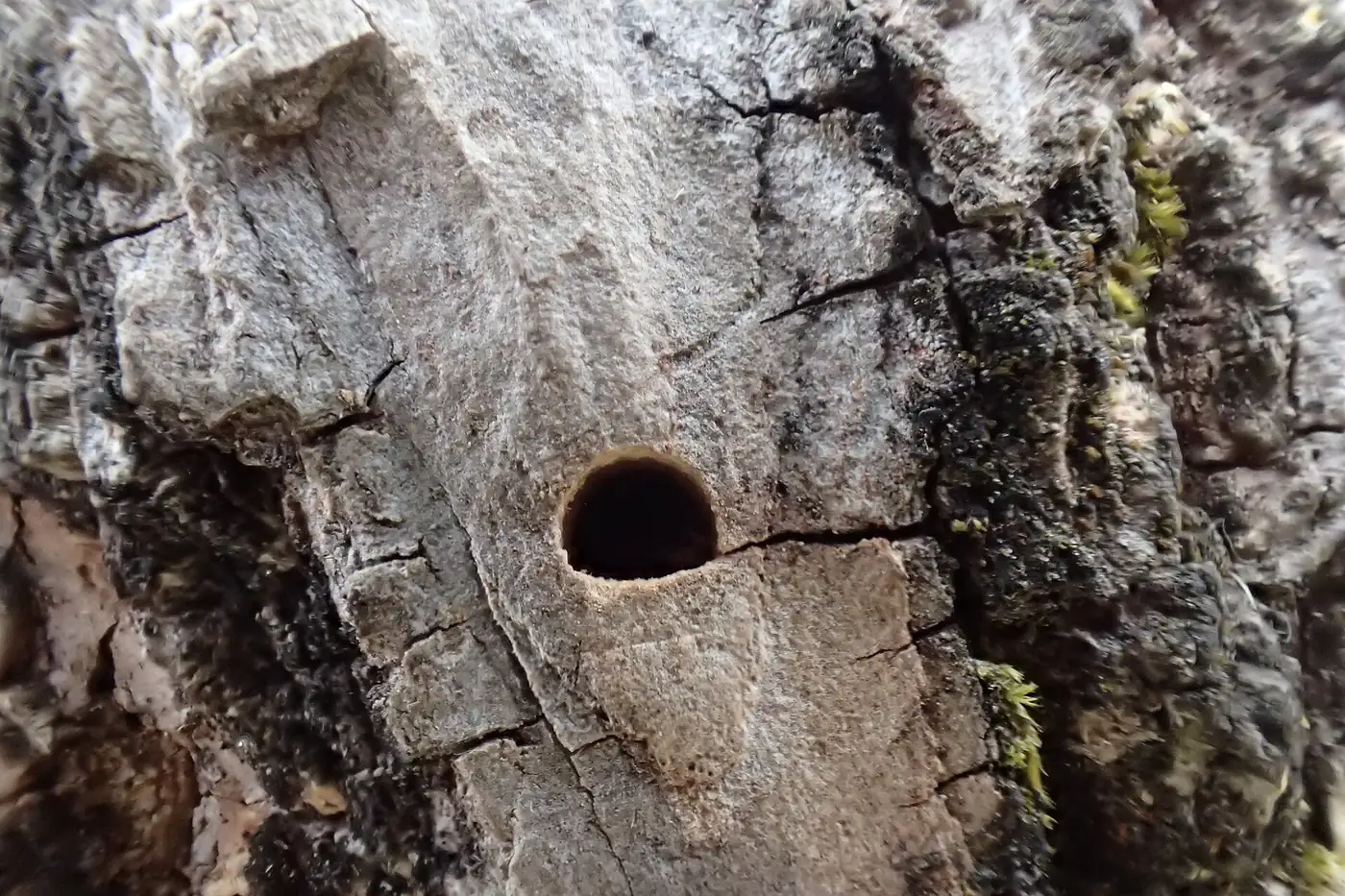
Small D-shaped holes in the bark are borers leaving. Lift a loose flake nearby and you will usually find winding galleries underneath.
A ridge of raised soil on the side opposite the lean means the root plate is moving. That is a failure in progress, not a lean.
Two stems of similar size rising from one point, with bark pinched into the union, is the split that turns up after a nor'easter.
Fruiting bodies where the trunk meets the ground point to decay in the wood that holds the tree up. That earns an inspection.
Heavy woodpecker damage on an upper trunk usually means the birds found larvae. The tree is further along than it looks from the road.
Everything a Morris County lot tends to need: takedowns, pruning, stumps, dead ash, storm callouts and clearing.
Felled whole where there is room to lay it out, otherwise dismantled from the top on ropes.
Read more
Thinning, raising, reduction and deadwooding, cut at the branch collar and never topped.
Read more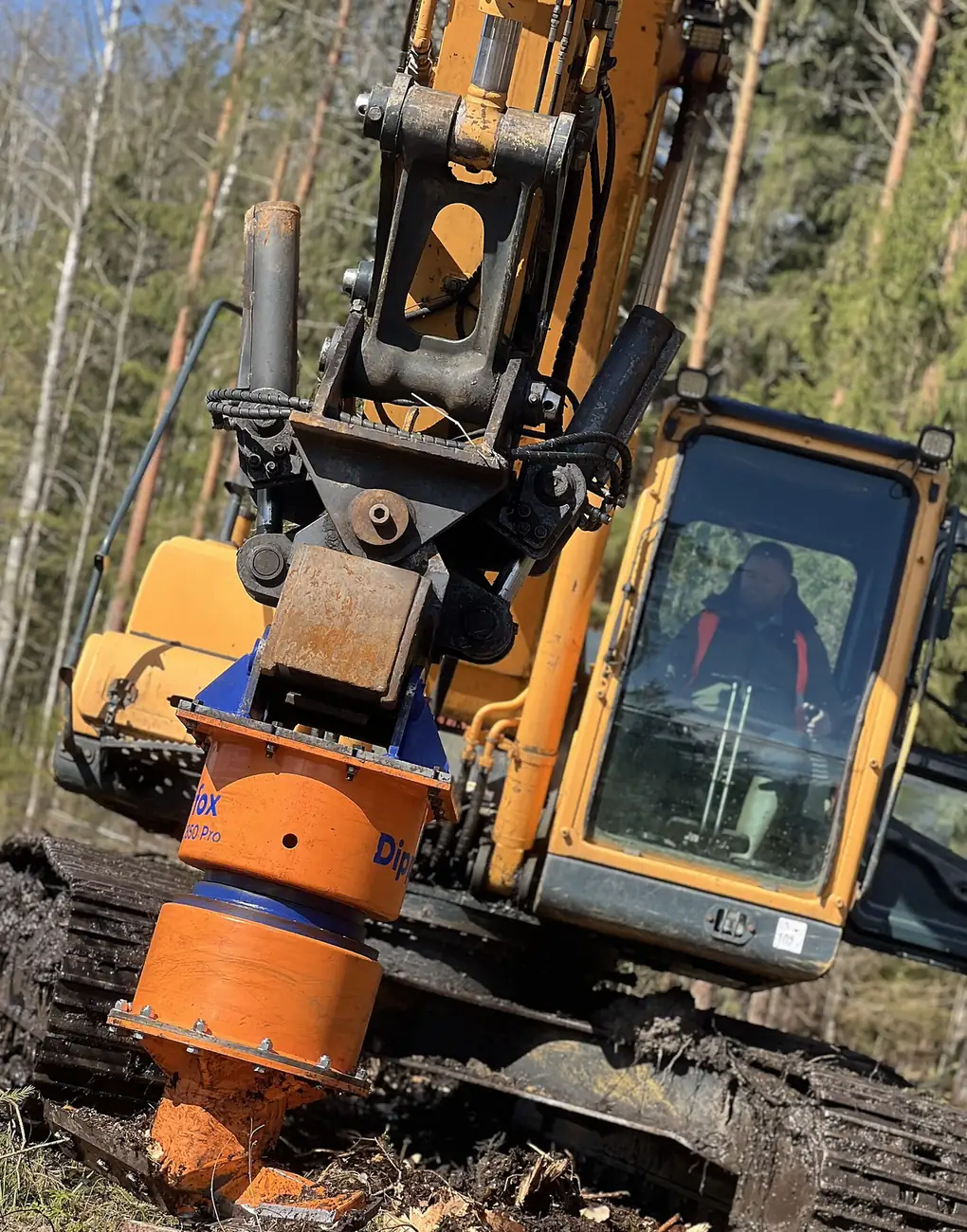
Chewed out below the surface until the ground will take turf, a shrub or a fence post.
Read more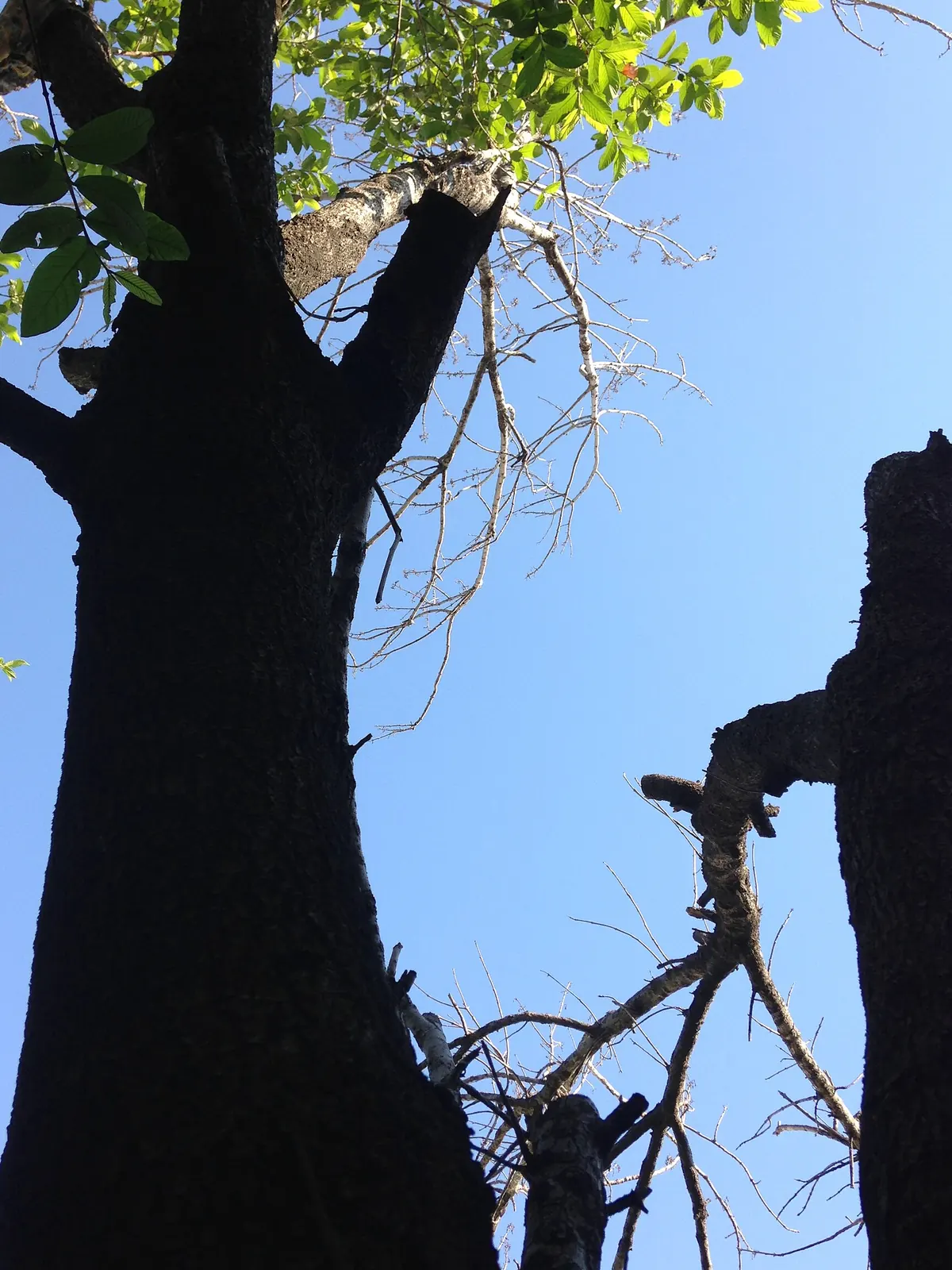
Trees on structures and blocked driveways first, then the rest of the hazard, then cleanup.
Read more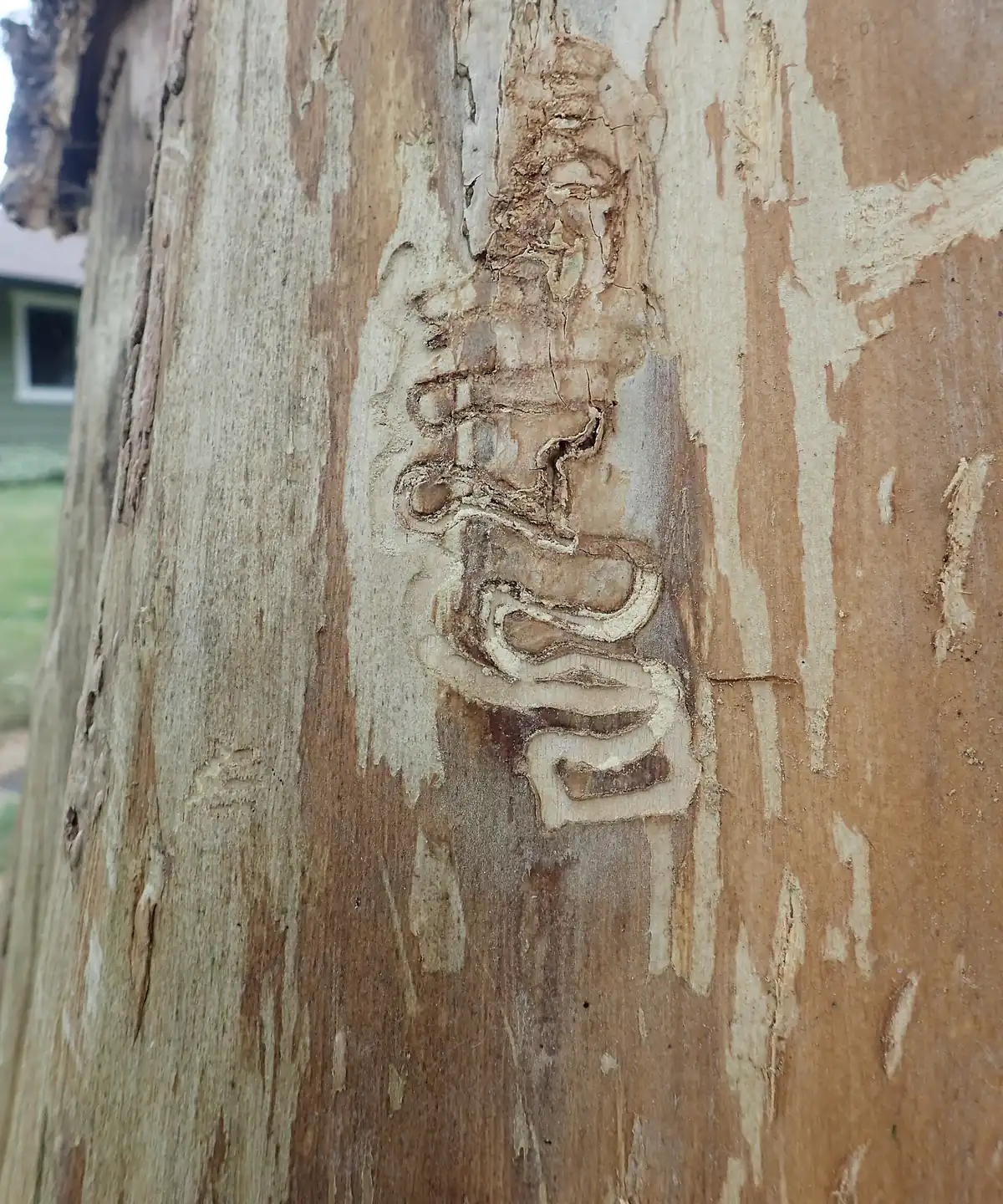
Standing dead ash, taken down the way brittle wood has to be taken down, not climbed.
Read more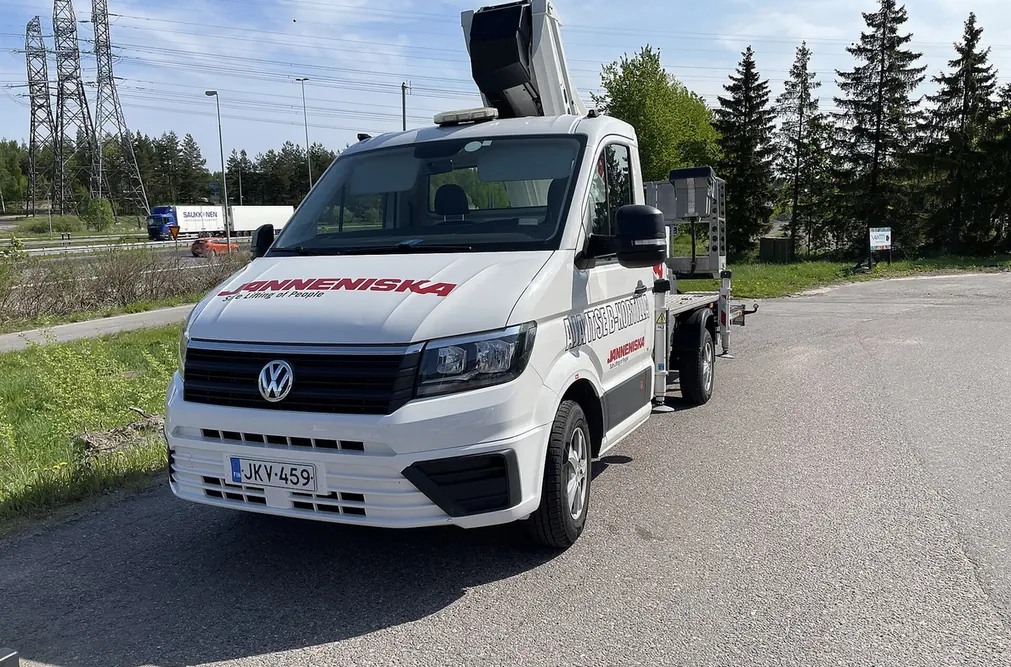
Brush, undergrowth and stems cleared to an agreed line, with the township threshold checked.
Read moreBecause New Jersey lets you check, and almost nobody does. The state licenses the people who work on trees, registers the companies that employ them, and assigns each registered business an NJTC number. That number has to be displayed on every service vehicle, three inches high, on at least two sides. So before anyone in Parsippany puts a rope in your tree you can walk out and read the truck. Ask for the number. Ask which of the two licences the crew holds. Ask for the insurance certificate the state already obliges a registered business to carry. Three questions, two minutes, before anyone leaves the ground.
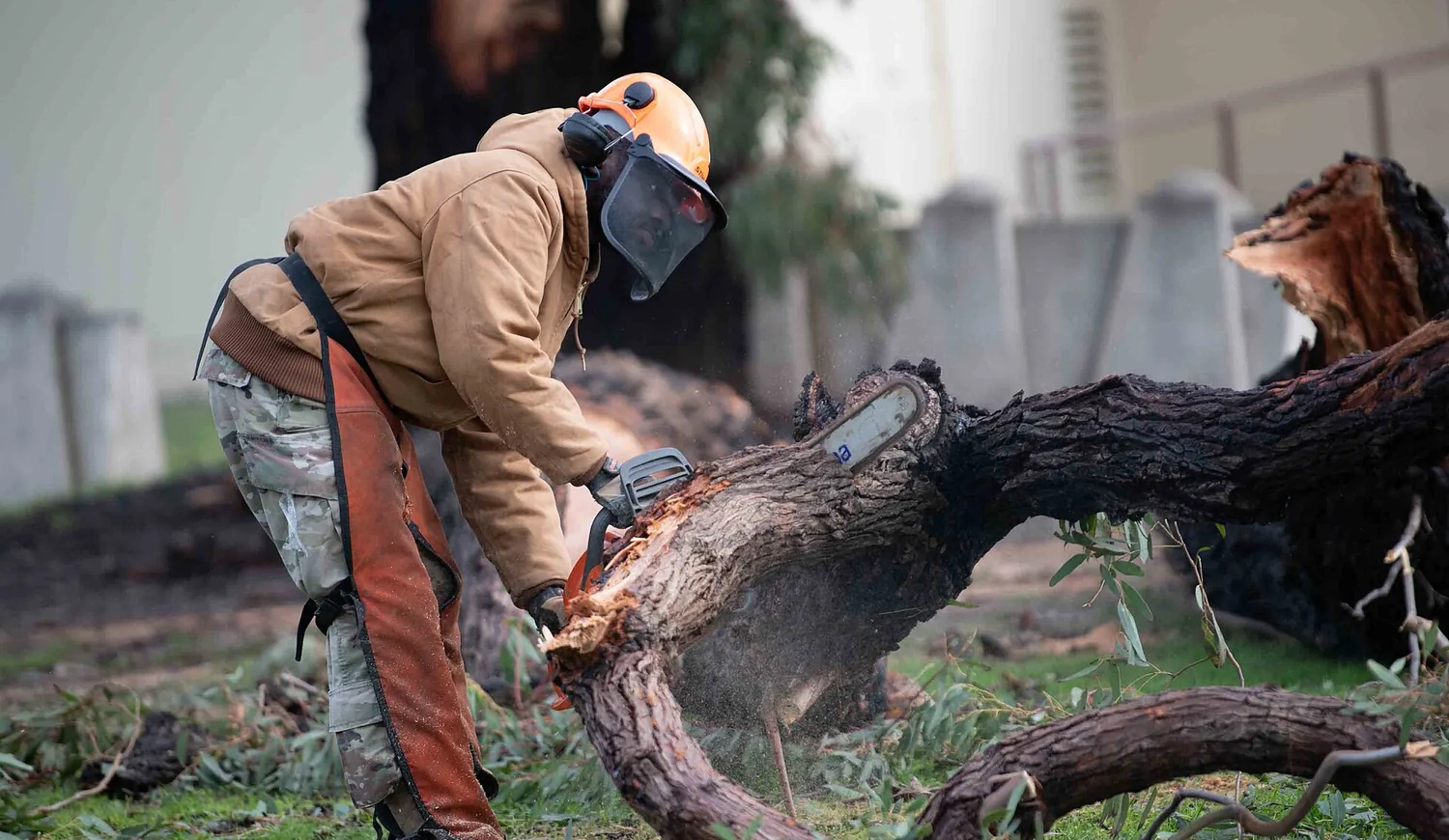
The drop zone, the access and the soundness of the wood decide the method between them. Preference does not come into it, and dead ash removes the climbing option outright.
| Method | How it works | When it fits | What the site needs | Watch for |
|---|---|---|---|---|
| Whole-tree felling | Hinged and dropped in one piece | Open ground with room to lay it out | A drop zone clear of the house, fence and wires | Rare on a 1960s subdivision lot |
| Sectional dismantling | A climber takes it down top-down on ropes | Sound trees over roofs, fences and drives | A safe tie-in and somewhere to land the pieces | Slower, and the usual answer in town |
| Crane-assisted | Cut sections lifted out over the obstacle | Large, dead, or unsafe-to-climb trees | Room to set the crane and its outriggers | Becomes the default once ash goes brittle |
| Aerial lift | Cuts made from a bucket rather than a rope | Roadside and open-frontage work | Firm ground the lift can reach and stand on | Stops at a soft back gate |
Two things landed at once. The median Parsippany house was built in 1965, so the oaks left standing around those postwar lots are sixty years old and tall enough to reach a roof. Then the emerald ash borer arrived, and Morris County had the densest ash population in New Jersey to lose. What is left is an unusual number of large dead ash standing over houses nobody sited with that in mind. We take them down, prune what can be kept, grind the stumps, clear lots, and turn out when something comes down at night. The pattern is consistent enough now that we plan the working week around it.
We run Parsippany and the ring around it: Morris Plains, Denville and Boonton to the west, Montville north, East Hanover and Whippany south, Morristown and Randolph beyond. Same rates across the county, no travel line on the invoice.